Building a pool in Guadalupe County is a permanent decision. If the steel is placed incorrectly or the plumbing is cheap, you cannot simply swap it out like a vinyl liner.
When you look for a Seguin custom pool builder, you are looking for someone who understands how Texas soil behaves and how to build a structure that lasts thirty years instead of ten. For those wanting a high-end result, gunite is the standard. It provides the durability and design flexibility that fiberglass or vinyl shells cannot match.
Why Gunite is the Right Choice for Seguin Homes
Most homeowners choose between three types of pools: vinyl, fiberglass, and gunite. Vinyl is cheap but tears. Fiberglass is fast to install but limits your shape and depth options. Gunite—which is a mixture of cement and sand sprayed through a high-pressure hose—is essentially a reinforced concrete shell.
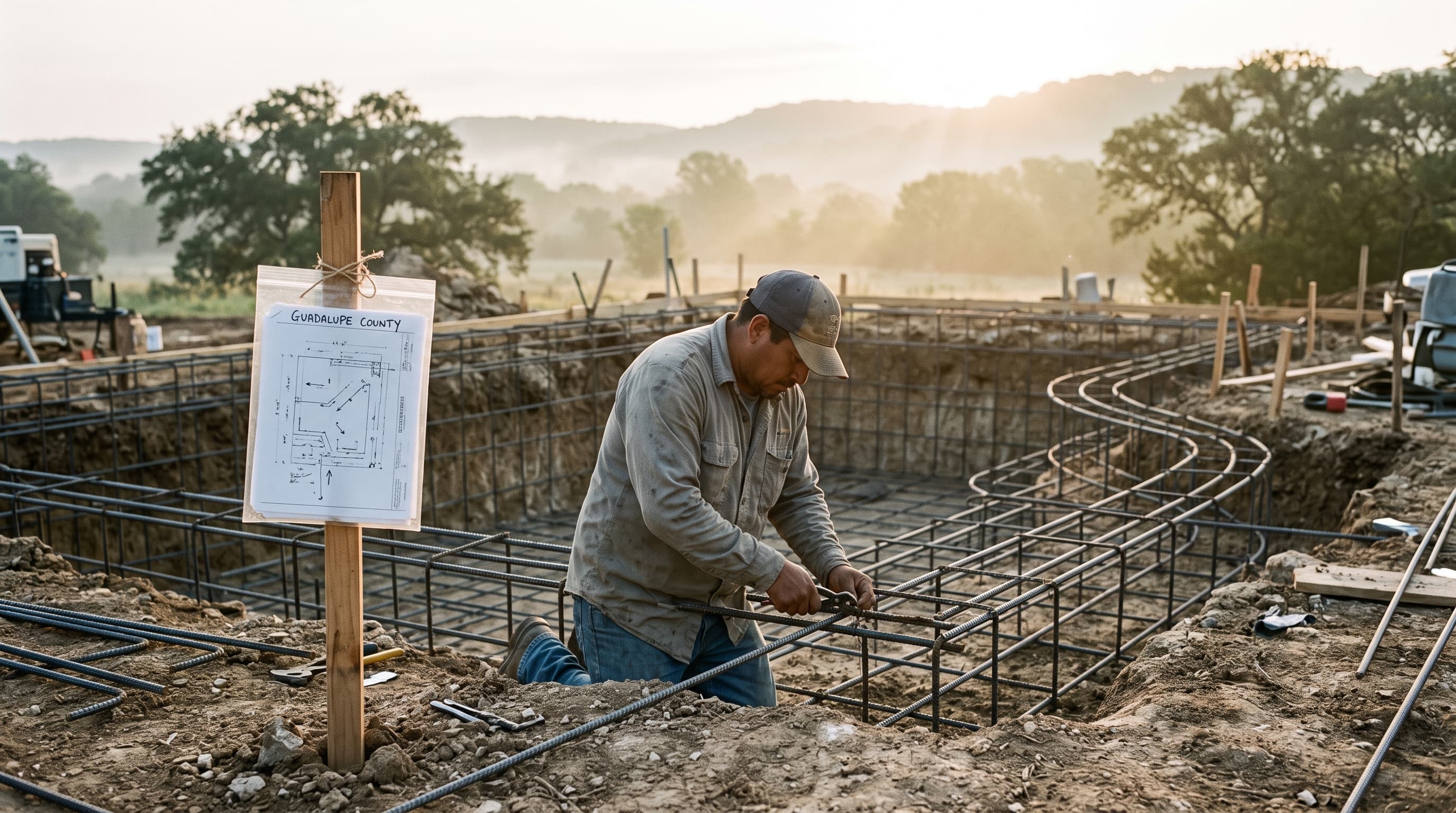
In the Texas Hill Country and around Seguin, ground movement is a real concern. A gunite pool is built with a heavy cage of steel rebar that ties the entire structure together. This makes it far more resistant to cracking caused by shifting soil than pre-fabricated shells.
Beyond durability, gunite allows for total customization. If you want a specific tanning ledge, a deep end for diving, or a custom shape that fits around an existing oak tree, gunite is the only way to get it. You aren't limited to a catalog of shapes; the pool is built to fit your specific lot.
What to Ask Your Seguin Custom Pool Builder
Not every contractor who says they build pools understands the specifics of local codes and soil conditions in Seguin. Before signing a contract, you need concrete answers to a few specific questions.
First, ask about their steel schedule. A pool is only as strong as its skeleton. You want to know how much rebar is being used and how it is tied. If a builder glosses over the structural phase and focuses only on the tile and coping, that is a red flag.
Second, ask about drainage. Seguin has areas with heavy clay and others with sandy loam. Improper drainage around a pool deck can lead to settling or water seeping back into the shell. A professional operator will have a plan for where the water goes when it rains four inches in one afternoon.
Third, verify their local references. A builder who works primarily in San Antonio or Austin might not be familiar with Seguin's specific permitting process. You want someone who knows the local inspectors and understands the requirements for fencing and electrical bonding in Guadalupe County.
Planning Your Pool Design for Texas Heat
A pool is more than just a hole filled with water. To make it functional for the Texas climate, you have to plan for how you will actually use it during a 100-degree July.
Tanning ledges (or Baja shelves) are now standard for a reason. They allow you to put lounge chairs in three inches of water, keeping you cool without being fully submerged. This is where most families spend their time.
You also need to consider the depth profile. While deep ends are great for jumping, they take more energy to heat and chemicals to maintain. Many homeowners are moving toward "sports pools" or modified rectangles that balance a shallow lounging area with a mid-depth swimming area.
Lastly, think about the equipment. Saltwater systems have become the preference in our region because they are gentler on the skin and easier to manage than traditional chlorine tablets. When choosing your pump and filter, prioritize energy efficiency. A variable speed pump will save you significant money on your monthly electric bill during the summer peak.
The Gunite Construction Process: What to Expect
Building a custom concrete pool is a multi-stage process that takes more time than a pre-fab install. Knowing the steps helps you manage expectations and spot potential issues early.
- 1. Layout and Excavation: The builder marks the shape and digs the hole. This is where drainage planning happens.
- 2. Steel Installation: A grid of rebar is tied together to create the structural frame.
- 3. Plumbing: Pipes for the drains, returns, and cleaners are laid and pressure-tested before they are covered.
- 4. Gunite Application: The concrete mixture is sprayed into the shell. This is the most critical phase for the pool's integrity.
- 5. Curing: The shell must cure. This involves watering the concrete regularly to prevent premature drying and cracking.
- 6. Tile and Coping: The decorative edge (coping) and the waterline tile are installed.
- 7. Plaster/Finish: The final interior coating is applied, and the pool is filled with water.
Each of these steps requires a different skill set. A quality builder manages these subcontractors tightly to ensure the project doesn't stall for weeks between phases.
What to do next
If you are planning a build, take these steps before calling a contractor:
- * Check your plat: Locate your property lines and utility easements so you know exactly where the pool can legally go.
- * Determine your budget: Decide on a hard limit that includes not just the pool, but the decking, fencing, and landscaping.
- * List your "must-haves": Decide if you need a tanning ledge, an integrated spa, or specific lighting for nighttime use.
- * Verify insurance: Ensure any builder you consider carries full general liability and workers' compensation insurance.
If you want a pool that is built to last and fits the specific needs of your property, we can help. We build custom gunite pools designed for the Texas climate. Reach out to Turner Custom Pools to discuss your project and see if we are the right fit for your backyard.