Most pool owners in Guadalupe County treat September as a transition month. The kids are back in school, the heat breaks, and they assume the pool can coast on its own until winter hits. That assumption is the most expensive mistake you can make.
September is when you set the stage for a healthy spring. The water chemistry you balance now, the surfaces you clean, and the equipment you service determine whether you open in April with clear water or spend the first month of the season fighting algae and peeling plaster. If you are looking for a pool builder texas hill country who understands how local conditions affect your pool, this is the month to get ahead of the curve.
Myth: You Can Just Let the Pool Sit Until Winter
The Fact: Guadalupe County soil is heavy clay with caliche rock underneath. When the ground dries out in late summer, it shrinks. When the first hard rains come in September and October, it swells. This expansion and contraction puts stress on your pool shell and the surrounding drainage.
If you let the water level drop significantly over the summer, the exposed plaster and tile are vulnerable to freeze-thaw cycles that can start in October. More importantly, low water levels can allow debris to settle into the skimmer lines and pump baskets, creating clogs that are difficult to clear once the water is down.
What to do: Maintain your water level at the midpoint of the skimmer. In Seguin and McQueeney, this is not just about aesthetics; it is about protecting the structural integrity of the gunite shell against local soil movement.
Myth: Algae Can’t Grow in Cool Water
The Fact: Algae does not care about the temperature. It cares about nutrients. In September, leaf drop from live oaks and other native trees in the Hill Country introduces phosphates and nitrates into your pool. If your filtration system is running on a summer schedule, it may not be cycling the water enough to break down these new nutrients.
Gunite pools are porous. If you have any micro-cracks or rough spots in the plaster, algae spores embed themselves there. Once they do, they are nearly impossible to eradicate without a full acid wash.
What to do: Switch your pump to run 8–12 hours a day in September. This increased circulation helps break down the organic load from falling leaves before it can establish a foothold in the plaster.
Myth: You Don’t Need to Shock the Pool in the Fall
The Fact: Chlorine demand spikes in September. Even if the water looks clear, the amount of free chlorine needed to keep the water sanitized rises as organic matter increases. If you are only adding chlorine to keep a reading of 1–2 ppm, you are likely under-dosing.
What to do: Perform a "shock" treatment in mid-September. This is not about turning the water bright blue; it is about oxidizing the organic compounds that cloud the water and feed bacteria. For a gunite pool, this is critical because the plaster can absorb these compounds, leading to long-term discoloration.
Myth: The Equipment Can Wait Until Spring
The Fact: Pumps and filters are mechanical. They are designed to run continuously. If you let them sit idle for three months, seals dry out, bearings seize, and motors struggle to start. In the Texas climate, the dust and pollen that settle on outdoor equipment in September and October are abrasive.
What to do: Run your pump and filter 8–12 hours a day, even if you are not swimming. Clean the filter cartridge or backwash the sand filter every two weeks. This keeps the system healthy and prevents the expensive repair call you will get in April when the motor fails to start.
Myth: Covering the Pool in October Is Enough
The Fact: A pool cover stops debris, but it does not stop water chemistry from going bad. If you cover a pool with high chlorine demand and high phosphate levels, you are creating a sealed environment where bacteria can thrive. When you uncover it in spring, you will find a green, smelly mess that requires a full drain and acid wash.
What to do: Balance your water chemistry to "winter-ready" levels before you put the cover on. This means low phosphate, stable pH, and adequate chlorine. For a custom gunite pool, this is the difference between a simple spring opening and a costly restoration project.
What to Do Next
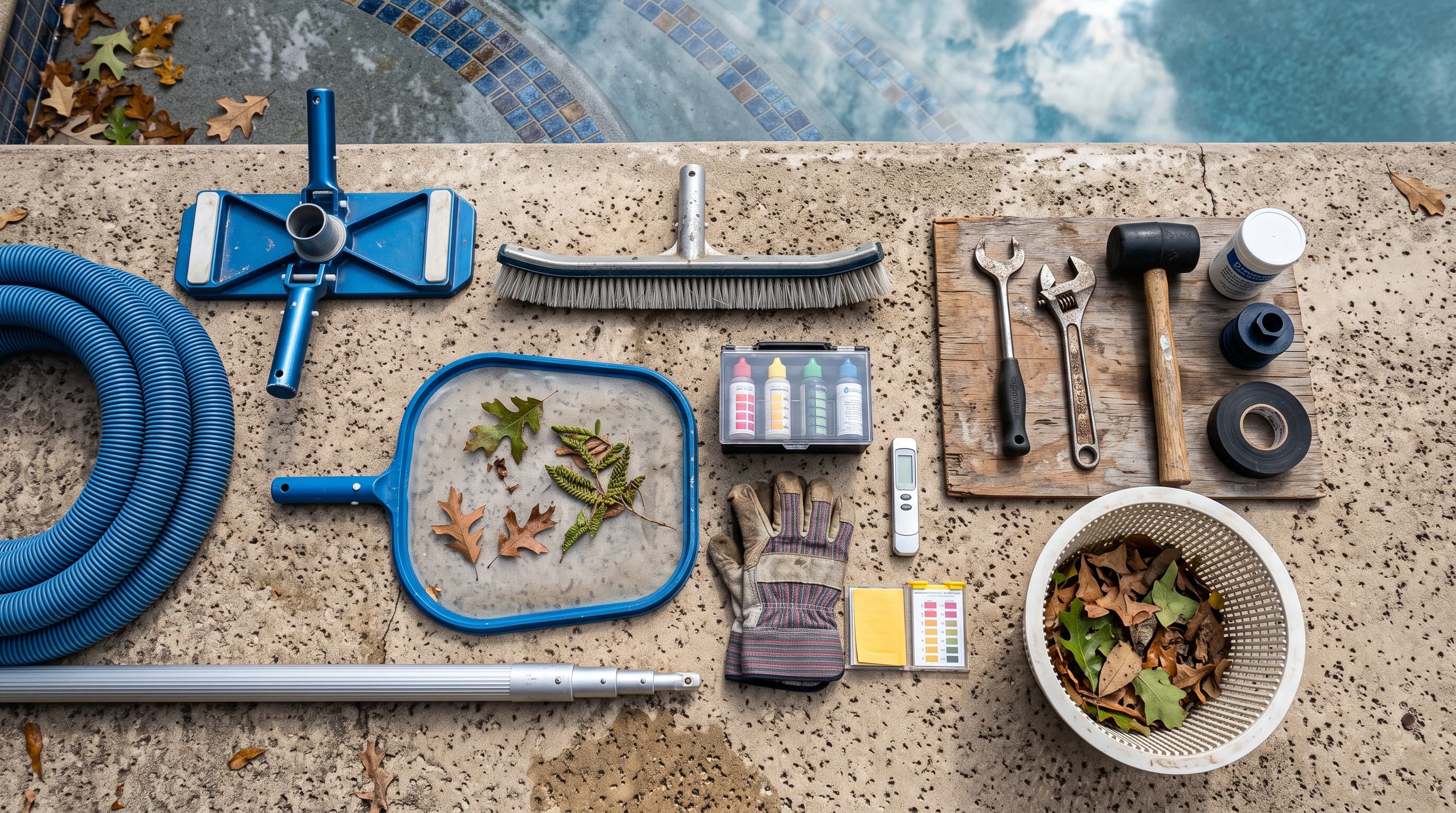
- 1. Test your water today. Check pH, alkalinity, chlorine, and phosphate levels. If you don’t have a test kit, bring a sample to a local pool supply store in Seguin.
- 2. Clean your skimmers and baskets. Remove all debris. Check for clogs in the lines.
- 3. Run your pump longer. Increase runtime to 8–12 hours daily for the rest of September.
- 4. Shock the pool. Perform a full shock treatment in mid-September to oxidize organic matter.
- 5. Inspect your plaster. Look for any rough spots, cracks, or discoloration. Note them now so you can address them before winter.
If you are considering a new pool or a renovation, the best time to plan is now. The ground is dry, the weather is mild, and you can schedule a build that starts in the fall and finishes before the next summer.
At Turner Custom Pools, we build custom gunite pools in Seguin, McQueeney, Marion, and Guadalupe County. We understand how local soil and climate affect your pool, and we build for the long term. If you want to talk about what a custom pool can do for your backyard, let’s have a conversation. We are not in a rush, and neither should you.