Waterfalls and Water Features for a Seguin Pool: What to Decide at the Design Stage
Moving water is one of the first things people ask us about when they start planning a pool. They have seen a rock waterfall or a clean sheet of water spilling into a pool, and they want it in their own backyard. That is a good instinct. But a water feature is not something you bolt on at the end. The best ones are decided early, and the reasons are mostly practical.
Why the design stage matters
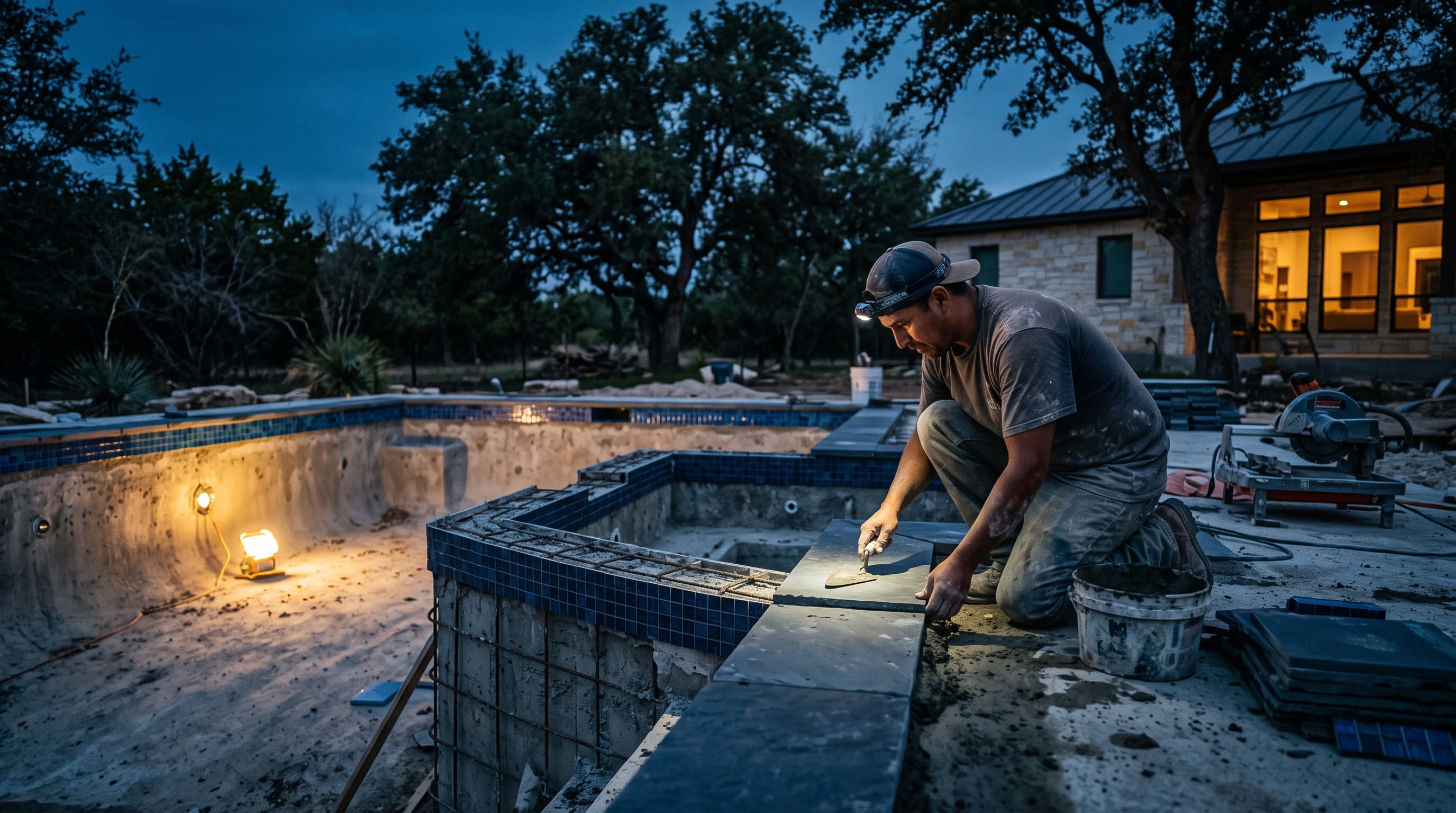
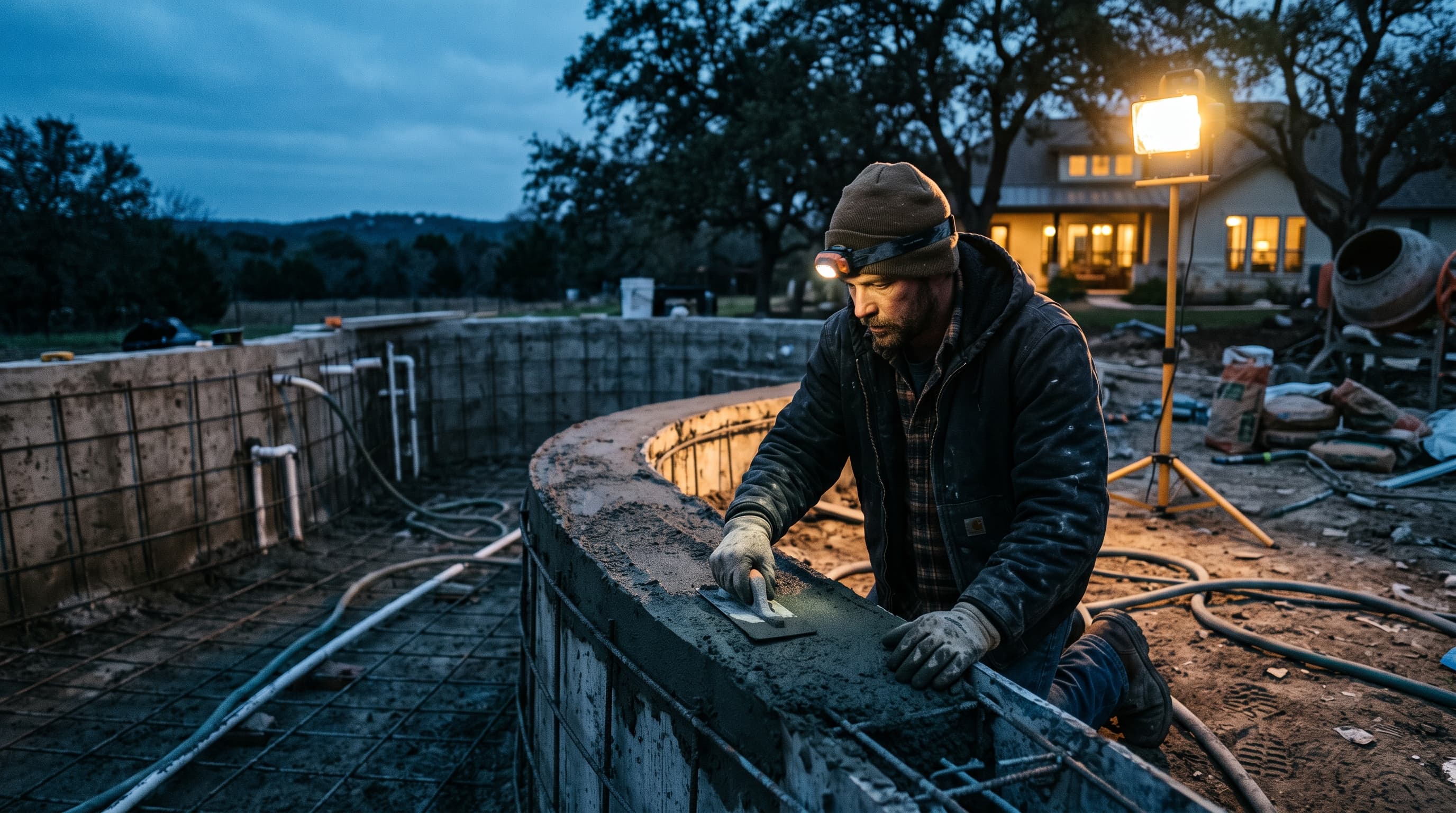
On a gunite pool, the water feature is built into the shell. Before the gunite goes on, the plumbing and electrical are roughed in: the equipment pad, the drains, and any water features get routed at that point. If you want a waterfall, we need to know before that stage so the lines run where they should. Adding one later is a very different job than planning it from the start.
Pick the kind of fall you want
The water features we build include rock falls, sheet falls and bubble barrels, and they do not behave the same way.
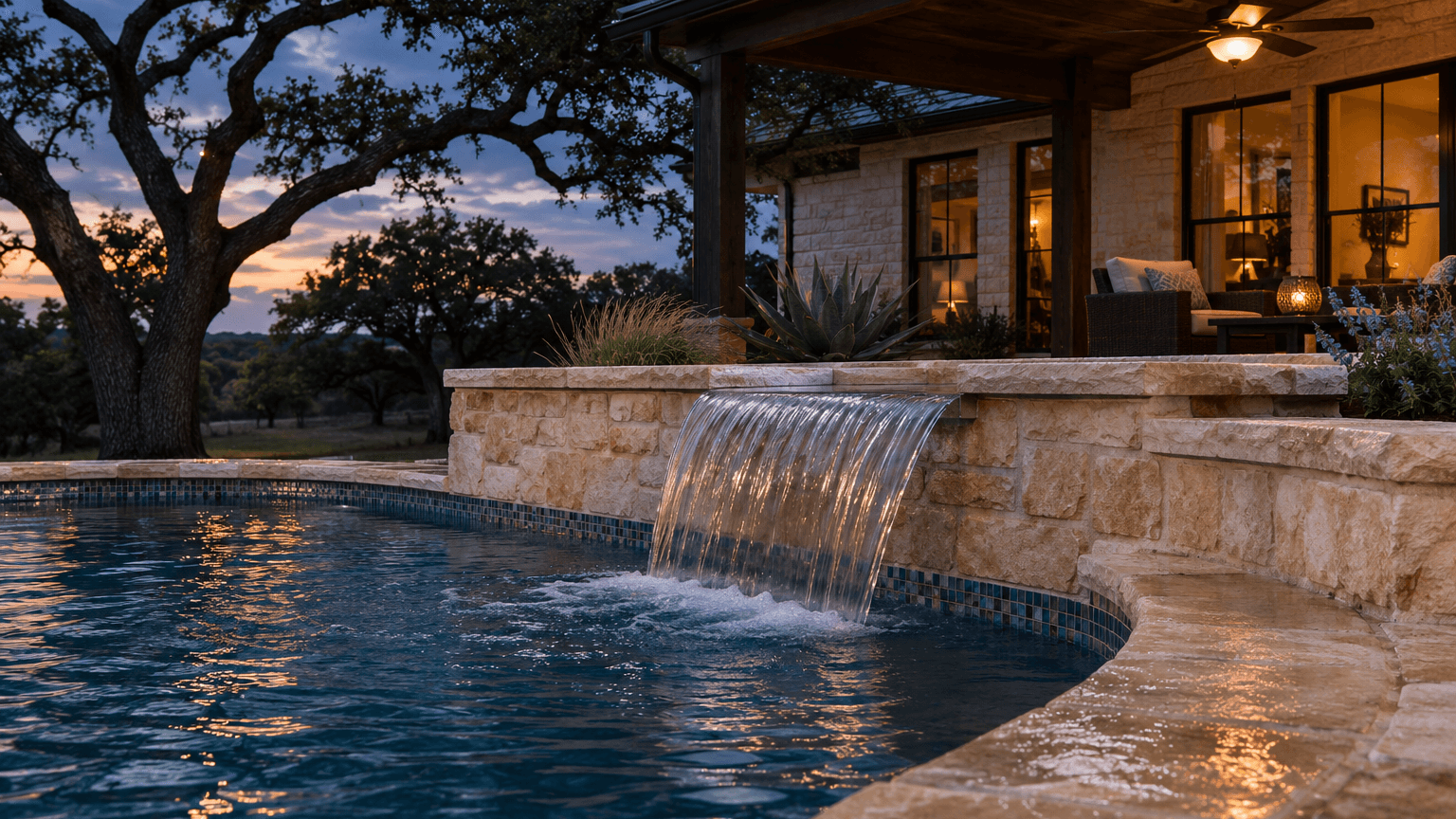
A rock fall looks natural and tends to make a livelier, splashier sound. A sheet fall sends water over a smooth edge in one clean, glassy curtain, and the look is more modern and quieter to the eye. Bubble barrels are a third option with a different look again. Look at photos, but also think about your house. A clean-lined home usually pairs with a different feature than a stone and timber one.
Think about sound before you fall in love with the look
Water falling from a height lands with noise. A taller fall into deeper water makes more of it, and a short, gentle fall makes less. Ask yourself where you sit. If your patio table is ten feet from the feature, you may love the sound or you may find you have to raise your voice. Bedroom windows matter too. Decide whether you want a backdrop for conversation or a real sound of rushing water, and tell your builder.
Where it goes in the yard
Place the feature so you can see it from the spots you actually use: the back door, the patio, the kitchen window. A waterfall that only faces the fence is wasted. Also think about which way it faces relative to your seating, and whether it sits at the end of the pool or next to a spa. Because the spa can be built into the same gunite shell, the two can work together, but how they share space is a design decision, not an afterthought.
Wind, splash and water level
Moving water loses some water to the air, and a fall can throw spray past the edge on a windy day. A tall, open fall catches more wind than a low, sheltered one. This is not a reason to skip the feature. It is a reason to talk about height and placement honestly, so you are not surprised by a wet deck or a lower waterline in summer.
Running it, controlling it, lighting it
A water feature needs to be turned on and off, and most people want to run it only when they are out there. Ask how it will be controlled, and whether it can be run from your phone along with the lights and other equipment. Ask about lighting too. A fall that looks great at noon can look even better at night when it is lit properly, but that wiring is easiest to plan during rough-in.
Questions to bring to your first meeting
- Where will we sit when the feature is running?
- How high should the fall be, and how loud will that be?
- Will it sit at the end of the pool, near the spa, or along a wall?
- How do I turn it on and off, and can it be automated?
None of these has one right answer. They depend on your lot, your house and how you plan to live around the pool.
If you are planning a pool in Seguin or the surrounding area and want moving water in the design, start with a conversation. Tell us what you picture, and we will talk through what makes sense for your yard. You can reach us through the contact page on our site.